
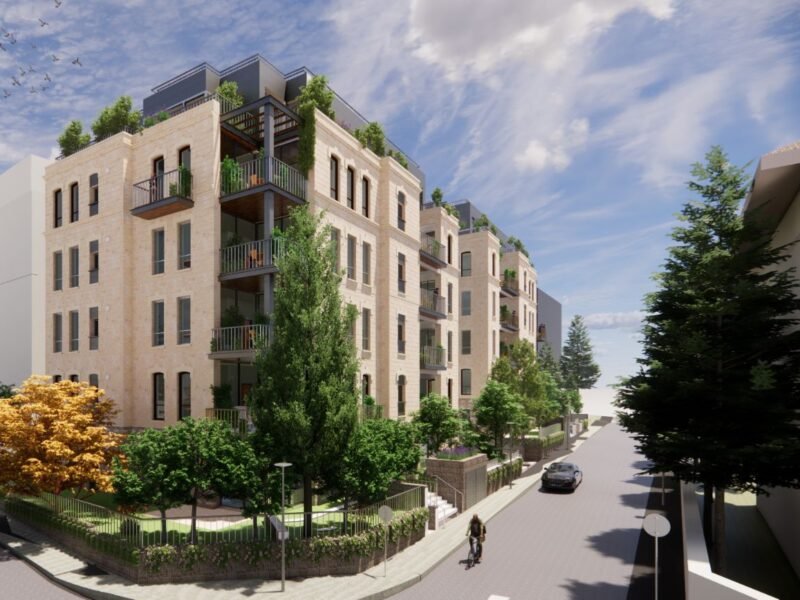
 Under construction
German Colony · Jerusalem
New construction · Jerusalem
Looking for new construction in Jerusalem? These are the new projects selling now in the city's most sought-after neighborhoods: the German Colony, the Greek Colony, Rehavia, Rassco, Katamon and Arnona. From pre-construction boutique buildings to new towers along Hebron Road, our team has reviewed every project listed here.
11 projects across 8 neighborhoods
Under construction German Colony · Jerusalem
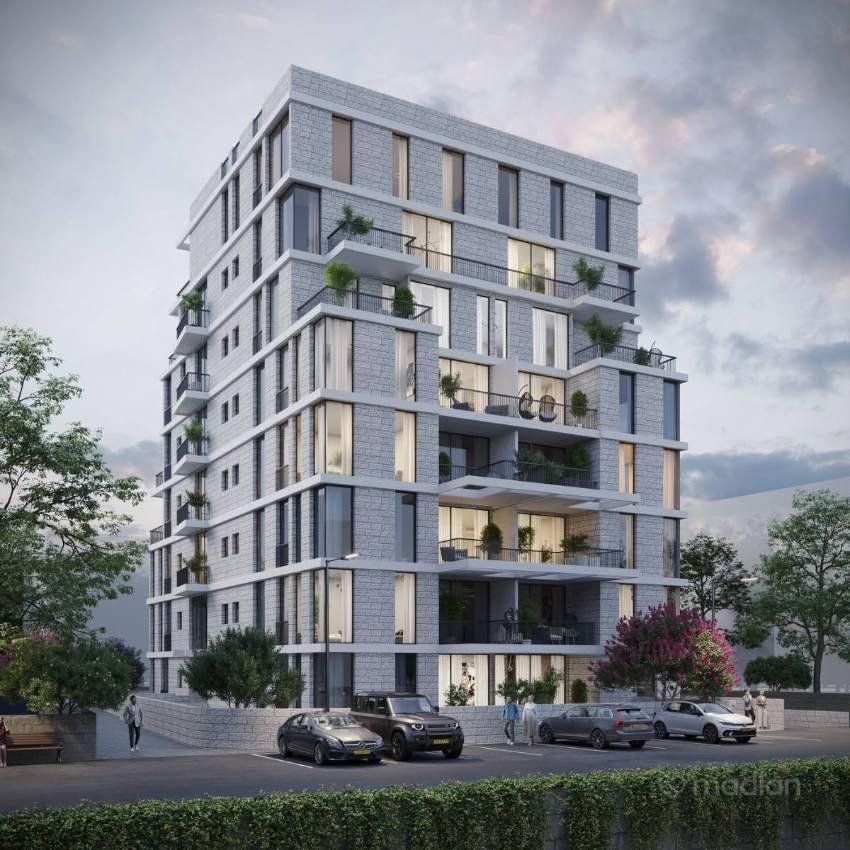
 Pre-sale
Greek Colony · Jerusalem
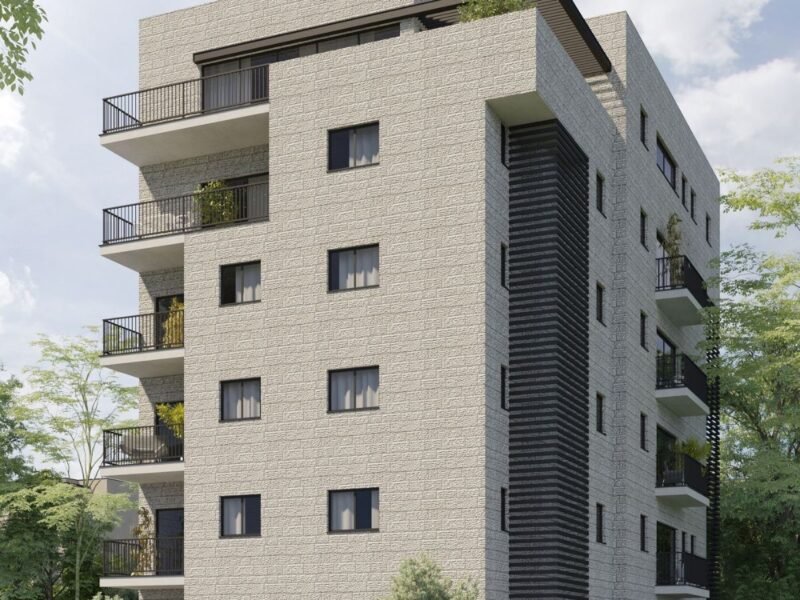 Under construction
Greek Colony · Jerusalem
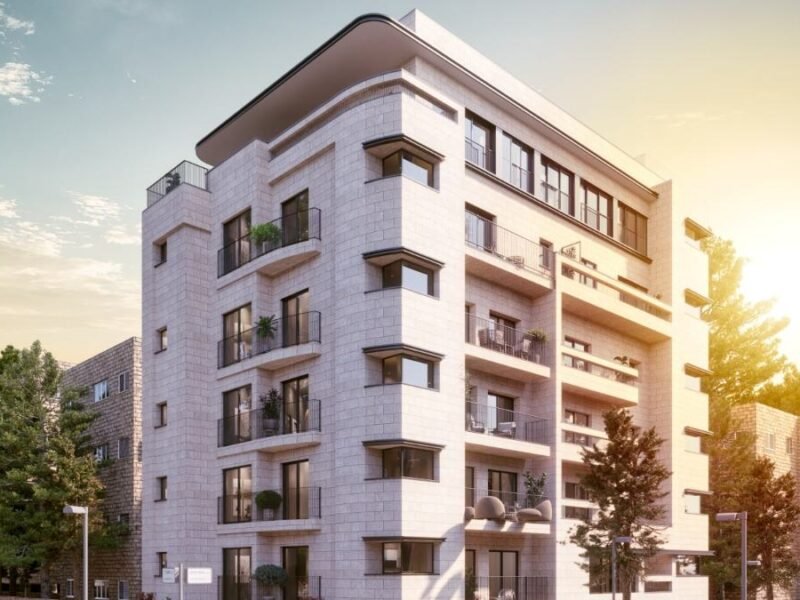 Pre-sale
Rehavia · Jerusalem
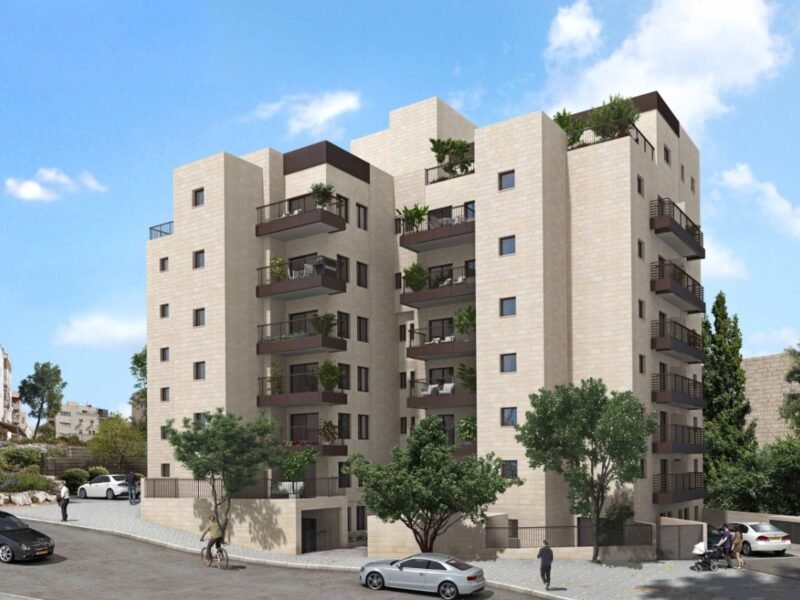 Pre-sale
Rassco · Jerusalem
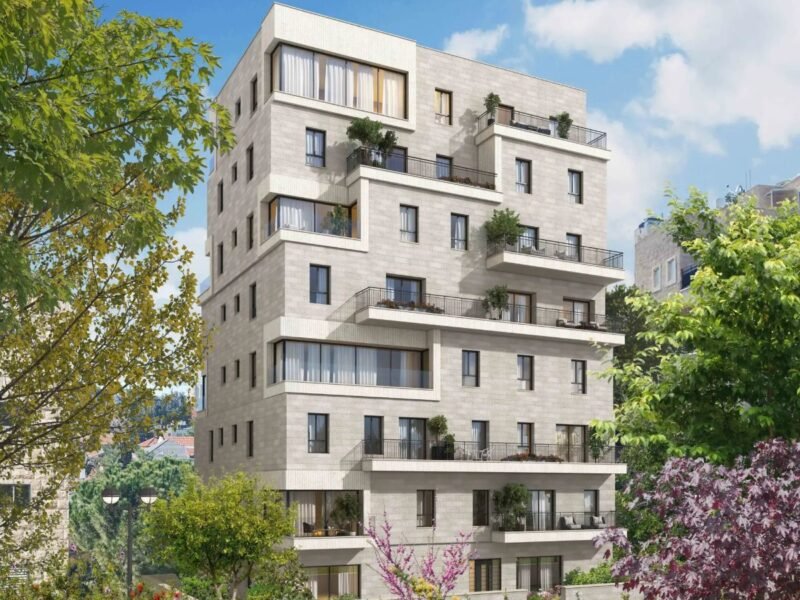 Pre-sale
Rassco · Jerusalem
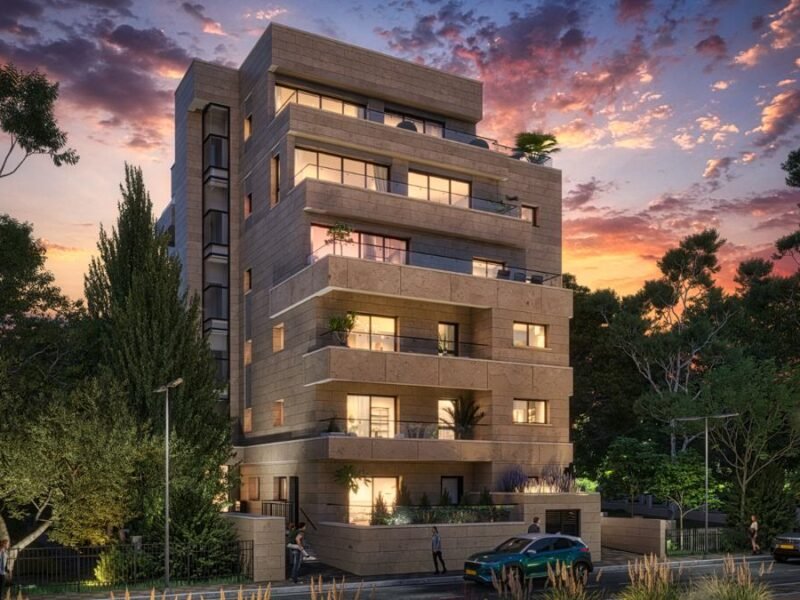 Pre-sale
North Arnona · Jerusalem
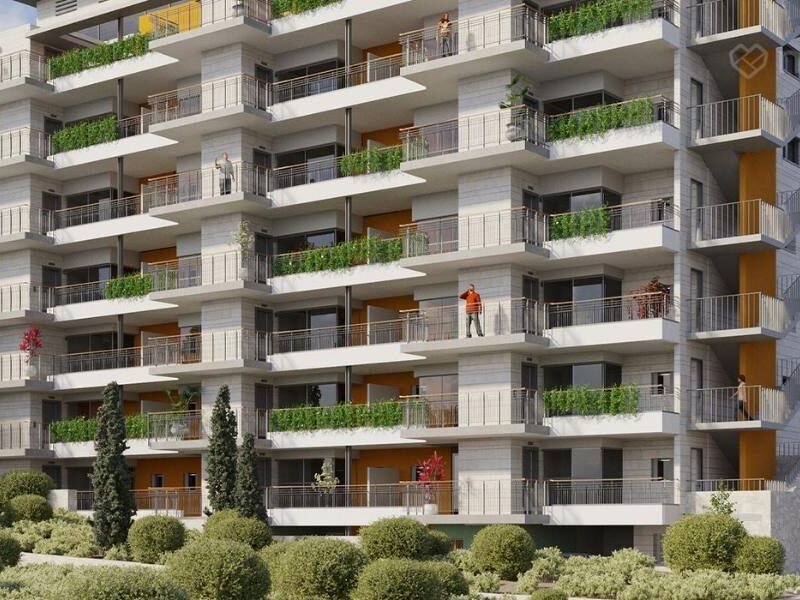 Under construction
Arnona · Jerusalem
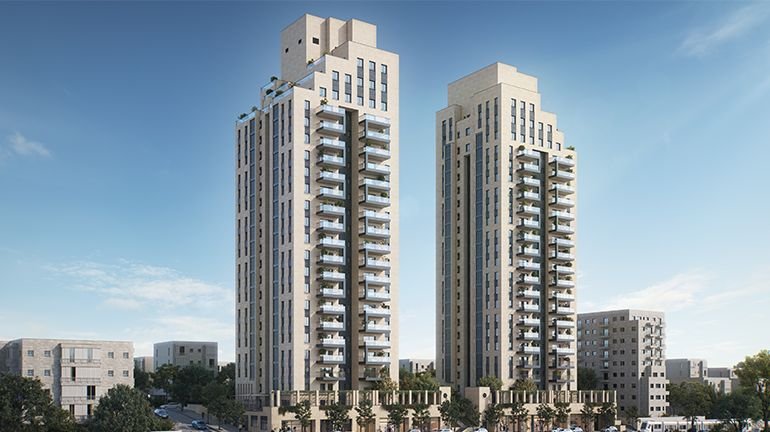 Under construction
Arnona · Jerusalem
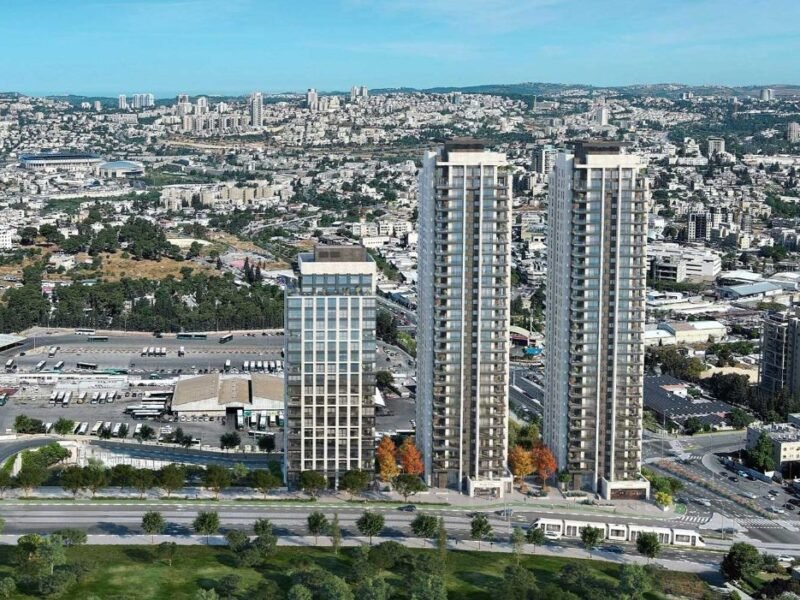 Under construction
Talpiot · Jerusalem
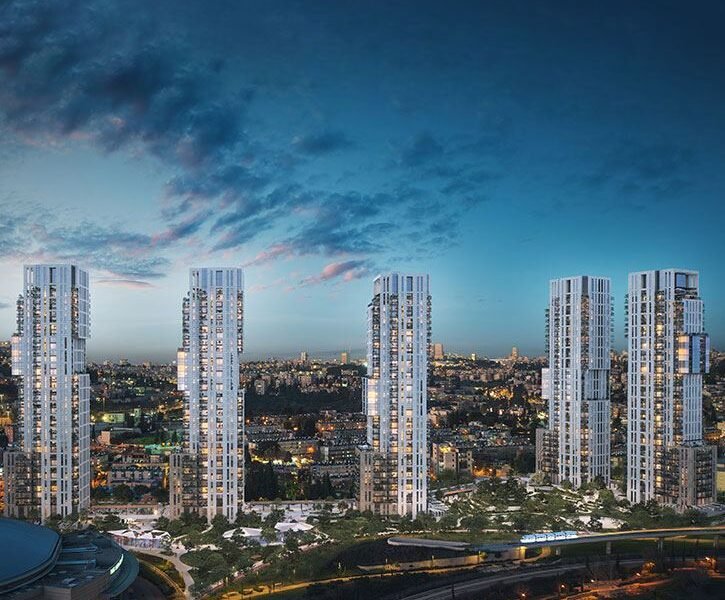 Under construction
Katamon · Jerusalem
Jerusalem has very little open land, so most new construction in the city’s central neighborhoods comes from urban renewal. Older buildings are either reinforced and expanded (TAMA 38) or demolished and rebuilt (pinui-binui). The result is a steady flow of boutique new projects of 15 to 50 apartments in neighborhoods that rarely see anything new, alongside larger tower projects on the city’s southern edge.
The German Colony, the Greek Colony and Rehavia are the first choice for most American buyers looking for a vacation home. They’re walkable, close to shuls and cafés, and a short ride from the Old City. New projects here are small and sell quickly, often before construction begins. Current examples include HaShlosha in the German Colony, Amatzia 3A and Yehoshua Bin Nun 28A in the Greek Colony, and Ussishkin 4 in Rehavia.
Rassco and Katamon offer a similar lifestyle with somewhat more space for the money. Boutique projects such as Horkanya 22 and Shimoni 23 suit families, while SOHO Jerusalem brings towers, a park and a shopping boulevard to Katamon.
Arnona and the Hebron Road corridor are where Jerusalem’s new residential towers are going up, along the new Blue Line light rail. Expect amenities such as gyms, pools, lobbies and residents’ lounges, and lower prices per square foot than the German Colony or the Greek Colony. See Arnona Residences, VISION and the smaller Ein Tzurim 4 and Caspi 8.
Most of our American clients focus on a handful of central West Jerusalem neighborhoods. Here is a quick guide to each, so you can see where new construction fits your lifestyle.
Downtown Jerusalem, around Ben Yehuda Street, Jaffa Road and the Mahane Yehuda market, is the liveliest part of the city, with restaurants, nightlife, the light rail and a growing number of new residential towers and boutique conversions. It suits buyers who want an urban, lock-and-leave apartment.
Mamilla sits just outside Jaffa Gate, with the open-air Mamilla Avenue shopping street, the Waldorf Astoria and King David hotels nearby and some of the most prestigious addresses in the city. Apartments here are few and very sought after, and many come with hotel-style services.
David’s Village is a gated luxury complex next to Mamilla, overlooking the Old City walls. It is one of the best-known addresses among overseas buyers, with concierge services, security and views of Jaffa Gate and the Tower of David.
Yemin Moshe is a small, quiet neighborhood of stone houses and stepped lanes facing the Old City walls, next to the Montefiore Windmill. Homes here rarely come up for sale.
Talbiya, next to Rehavia, is one of Jerusalem’s most elegant neighborhoods, home to the President’s Residence, the Jerusalem Theater and grand Arab-style villas. New apartments here come mainly from boutique urban renewal projects.
Baka, just south of the German Colony, is popular with English-speaking families for its shuls, schools and quieter streets, with Emek Refaim and the Train Track Park a short walk away.
Old Katamon and Kiryat Shmuel sit between Rehavia, the German Colony and Katamon. They are leafy, walkable and close to several English-speaking shuls, with a steady flow of TAMA 38 renovations and boutique new buildings.
Nachlaot and Shaarei Chesed are historic neighborhoods of courtyards and narrow lanes between the City Center and Rehavia, close to the Mahane Yehuda market and Sacher Park. They suit buyers looking for character and a central location.
Beit HaKerem is a green, established neighborhood in the west of the city, close to Hebrew University’s Givat Ram campus. Har Nof, further west, has a large English-speaking religious community and apartments with open views of the Jerusalem hills.
Most new construction in Israel is sold pre-construction (also called off-plan or pre-sale): you buy from the developer before or during building, usually at a lower price than the finished apartment will command. By law, your payments are protected by a bank guarantee. Part of the price is usually linked to Israel’s construction cost index, and payment plans such as 20/80 (20% at signing, 80% on completion) are common. The trade-off is time: completion dates can move, so it’s important to know where the project stands on permits and construction before you sign.
As buyer’s agents, we represent you, never the developer. We compare each project with the rest of the market, check the developer’s track record and the permit status, negotiate the price and payment terms, and work alongside your own Israeli attorney. Read our guide to buying property in Israel for the full process.
We have spent more than ten years helping over 200 overseas families buy in Israel, and Jerusalem is where we see the same mistake most often: buyers fall for a neighborhood, then take whichever building happens to be selling that month. Do it the other way round. Decide which three or four streets you would actually live on, then wait for the right building on one of them.
Most new construction in the German Colony, Baka, Rehavia, Katamon and Arnona is boutique: ten to forty apartments, often replacing an older building. The best apartments in a building that size are usually reserved before any public marketing starts, which is why so much of this market runs on relationships. Around 30% of the homes our clients buy were never publicly listed.
The German Colony, Rehavia and Talbiya carry the highest prices because there is so little land. Katamon, Arnona and Talpiot give noticeably more space for the money, with the same shuls, schools and cafes a short walk or drive away, and that is where most of our family buyers end up.
A renovated or nearly new apartment in a finished building often beats the new project next door. You can stand in it, see the light, meet the neighbors and know the price, with no index linkage and no waiting. We will always show you both.
Read buying off-plan in Israel and Jerusalem vs Tel Aviv before you decide.
Current new construction in Jerusalem includes boutique buildings such as HaShlosha in the German Colony, Amatzia 3A and Yehoshua Bin Nun 28A in the Greek Colony, Ussishkin 4 in Rehavia, and Horkanya 22 and Shimoni 23 in Rassco, plus larger projects like Arnona Residences, VISION and SOHO Jerusalem. Each has its own page above with photos, prices and status.
Pre-construction (also called pre-sale or buying off-plan) means buying an apartment from the developer before or during construction. Prices are usually lowest at this stage, your payments are protected by a bank guarantee, and you receive the keys when the building is completed, often two to four years later.
It depends heavily on the neighborhood. Recent new construction has ranged from roughly ₪38,000–45,000 per square meter (about ₪3,500–4,200 per square foot) in Talpiot and Arnona to ₪55,000–75,000 or more per square meter (about ₪5,100–7,000 per square foot) in Baka, the German Colony and the Greek Colony. Each project page shows the developer's starting price where one has been published.
Israeli listings count rooms, not bedrooms, and the living room counts as a room. A 5-room apartment usually has 4 bedrooms, and a 3-room apartment has 2. On our site, we always list the number of bedrooms.
Yes. Americans and other foreign residents regularly buy new construction in Jerusalem, usually directly from the developer and with their own Israeli attorney. Purchase tax is higher for non-residents than for a first Israeli home, so it's worth running the numbers before you commit.
They're Israel's two main urban renewal programs. TAMA 38 reinforces or rebuilds an existing building and adds new apartments. Pinui-binui (evacuation and rebuilding) replaces several older buildings with a larger new complex. Many of Jerusalem's boutique new projects are TAMA 38.
New apartments near Mamilla, David's Village, Yemin Moshe and downtown Jerusalem are rare and come up mainly in boutique projects and conversions. Tell us what you're looking for and we'll let you know about new projects in these areas, including ones that aren't listed publicly yet.
We search the whole Jerusalem market for you, including pre-launch and off-market opportunities, and we represent you, never the developer.